


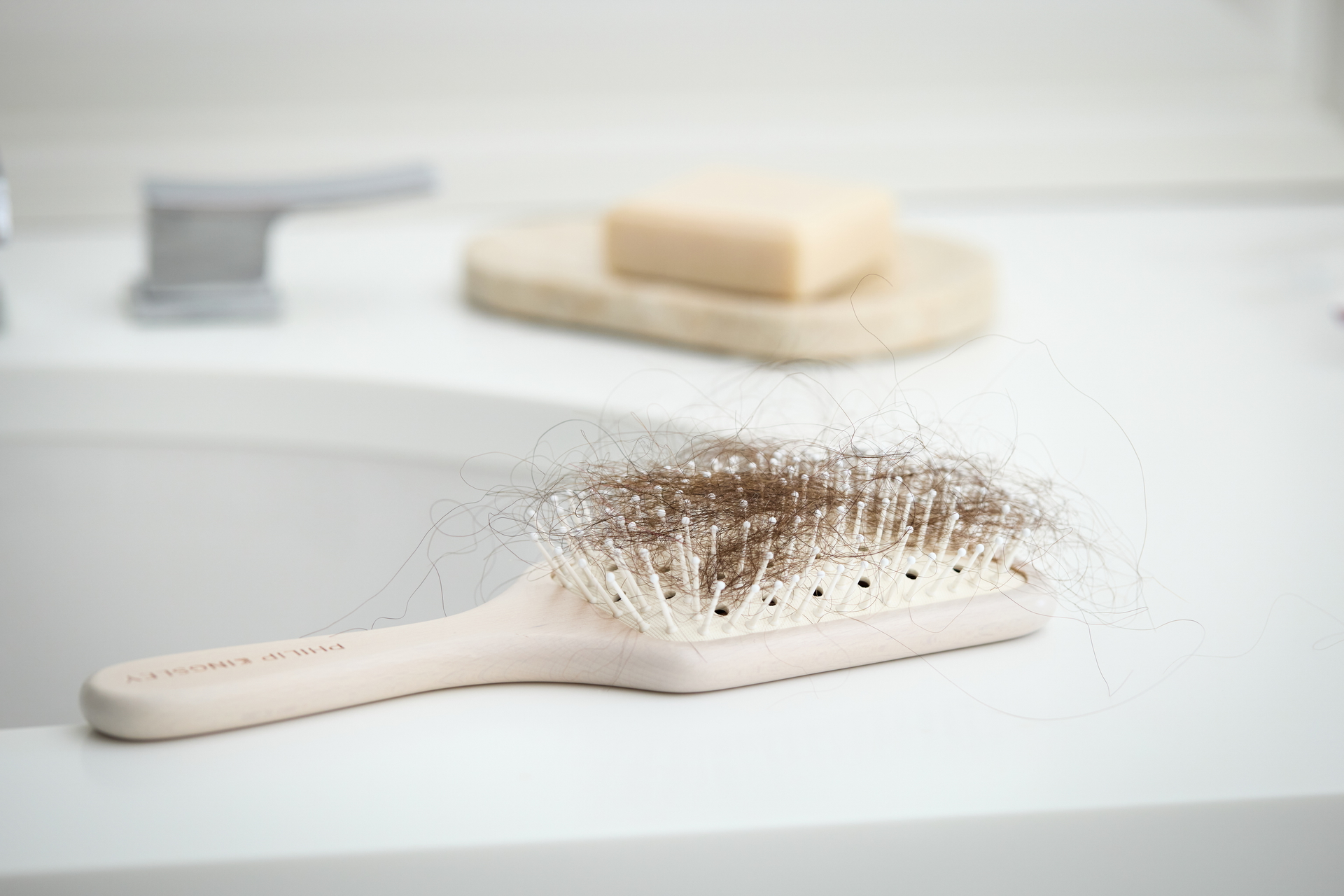

If you had the flu this season and are now noticing increased hair shedding, you are not alone. Many people experience hair loss after illness, particularly following a bad flu with a high fever.
This type of hair shedding is known as telogen effluvium, and while it can feel alarming, it is usually temporary.
Can the flu cause hair loss?
Yes. A severe flu can trigger telogen effluvium, a condition that causes excessive daily hair shedding. However, the hair loss does not happen while you are sick.
Instead, hair shedding typically appears around three months after the illness.
Why does hair loss after the flu take so long to show?
Hair grows in cycles. During illness, especially when the body is under stress, a higher number of hairs can be pushed into the resting phase of the growth cycle, known as the telogen phase.
Once this resting phase ends, those hairs shed. This delay explains why hair loss after the flu can seem sudden, even though the trigger occurred weeks earlier.
What causes Telogen Effluvium after Illness?
Several factors associated with the flu can disrupt the hair growth cycle:
-
High fever, also called post-febrile alopecia
-
Reduced appetite leading to nutrient deficiencies
-
Inflammation throughout the body
-
Physical stress on the system
Hair is highly sensitive to internal health changes, which is why even short-term illness can affect hair density.
Is hair loss after the flu permanent?
The good news is that telogen effluvium is temporary.
Even if the shedding feels dramatic, it stops once the hair cycle normalises which is normally around the 2-3 month mark, when hair growth resumes naturally as the body recovers.
How to reduce hair shedding and support regrowth
While you cannot stop hairs that have already entered the resting phase from shedding, you can support healthy regrowth and reduce further disruption:
-
Eat a nutrient-dense, balanced diet
-
Use targeted supplements if required, such as vitamin D, zinc, B12 or folate
-
Manage stress levels
-
Apply scalp treatments designed to support hair staying in the growth phase
-
Stay up to date with flu vaccinations
Minoxidil is not typically recommended for telogen effluvium, as this condition resolves on its own.
What actually helps with post-illness hair loss?
Hair loss reflects something that happened in the past. Focusing on the hair that is shedding can increase stress, which may prolong recovery.
Instead, prioritise scalp health, nutrition and gentle hair care to support the hair you still have.
One last thing to remember
Hair shedding after the flu is a sign that the body is recalibrating, not that permanent damage has occurred. With time, care and the right support, healthy hair growth returns.