


My father passed away suddenly in September 2016 from a stroke. He was my rock, my mentor, my champion and my best friend. We were so close; our relationship mirroring what generally comes to mind when you think of a beautiful mother-daughter relationship. I stood by him in hospital as his life support machine was switched off, just six hours earlier having chatted to him about my day and what he planned to have for lunch. My world collapsed, and then turned upside down. About five months later, I developed alopecia areata.
Alopecia areata is a non-scarring auto-immune type of hair loss that occurs when your body mistakenly attacks hair follicles in the growth (anagen) phase, causing areas of baldness. Unlike with scarring alopecia, alopecia areata doesn’t destroy hair follicles, so hair has the potential to grow back. It is often initially triggered by a stressful event, like a bereavement.
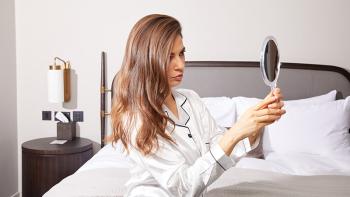
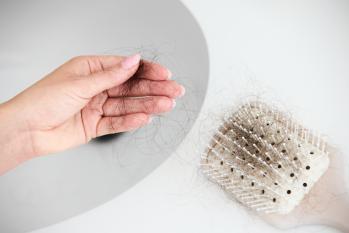
I vividly remember the day I discovered my first patch. I was shedding a huge amount of hair anyway, which I expected as the loss of a loved one often causes telogen effluvium. But after one particular shower I was running my hands through my hair and even more was falling out than usual. It wouldn’t stop. Being me, I started scrutinizing individual strands and saw that many of the hairs didn’t have a white blob (aka a ‘club’) at the end. ‘Odd’ I thought. I grabbed a hand mirror and came across a large bald spot on the back of my scalp. The colour drained from my face and I felt physically sick. My boyfriend (now husband) found me pacing the room. ‘I’m going bald.’ I whispered ‘Look!’. He parted my hair and said ‘oh no, don’t worry. It’s not a bald spot, you have all these tiny hairs growing from it’. He smiled. I screamed. One of the diagnostic features of alopecia areata is the presence of tiny ‘exclamation mark’ hairs. I lived around the corner from our London Clinic at the time and ran over so one of my colleagues could take a look (thank you Jane Martins) – alopecia areata it was.
Alopecia areata can be hugely distressing. Thinking about it can occupy hours of your day, tear apart your self-esteem and create extreme anxiety. One study from 2022 found that people with alopecia areata have up to a 38% higher risk of new-onset depression or anxiety.1 When I was first diagnosed, my husband would gently shake me awake each night as, unbeknownst to me, I was pulling on my hair in my sleep. The unpredictability of alopecia areata is perhaps the most unsettling element. It might make you feel better to know that alopecia areata is common. About 2% of the population is affected – which is the same percentage as psoriasis.
In our Clinic, I have seen many women and men with alopecia areata.
What causes it?
Usually, hair follicles enjoy something called ‘immune privilege’, but with alopecia areata this breaks down. Not everyone who has a break-down of hair follicle immune privilege will get alopecia areata, but it is widely agreed it is present in all people who do get AA.2 Other examples of tissues that enjoy immune privilege are the placenta and the brain.
The exact cause of alopecia areata isn’t fully understood, but it’s thought to be influenced by multiple genetic factors, as well as environmental, hormonal and health factors. The younger the age of onset, the more likely it is that it will progress.
While bereavement is a common initiator, for others a virus may trigger it. Covid-19 and Epstein Barr (mono) being examples. Sometimes there is no obvious cause.
You are more likely to get alopecia areata if it runs in your family (my half-sister had it) and if you have other autoimmune conditions, like rheumatoid arthritis, vitiligo, type 1 diabetes, thyroid disease and ulcerative colitis (which I have). Alopecia areata has also been associated with asthma, hay fever, as well as Vitamin D and Zinc deficiency. That’s not to say you should start taking high dose Vitamin D and Zinc supplements – but, if you have AA, have a blood test and supplement accordingly. Like with any type of hair loss, addressing all possible contributing factors is important.
Alopecia areata usually doesn’t cause any signs or symptoms other than hair loss. While a patch is active, it may have a slight pinkish colour (like poached salmon). Some people report they feel tingling, itching and burning on their scalp prior to the formation of a patch of hair loss. You may also have nail changes that look like the pitting on a thimble.
What Aloepcia Areata Looks Like
Alopecia areata can present itself in different ways.
Typical presentation
Typically, alopecia areata shows up as one or more circular or oval bald patches, that measure about the size of a large coin. You can get one patch or many. Patches can grow bigger before they get better and new patches can crop up. They can also come and go, and individual patches can converge together. Many of my clients get AA whenever they’re stressed – myself included. While that initial trigger tends to be big, subsequent ones don’t have to be.
With alopecia areata, the immune system only targets hairs in anagen (the growth phase). Hairs that come out are ‘cadaverized’ – as the immune system attacks the developing anagen hair in the follicle, it thins the hair shaft as it forms to the point of breakage – so you’re left with little stumps of hair on the scalp that are thicker at the top and thinner at the root (like an exclamation mark). The presence of these little porcupine hairs tells you that the patch is ‘active’ and is likely to expand. It is once they are gone that you are more likely to start to see regrowth.
In milder cases, many people aren’t even aware of a patch until their hairstylist or colourist points it out.
If hair grows back on its own, it usually does so within 6-12 months. Hair typically starts to regrow from the centre of the patch. In its patchy form, 66% of people have complete re-growth of hair within 5 years. However, there is a high rate of relapse, and the longer a patch remains hairless, the less likely it is to grow back.3
Less common presentations of Alopecia Areata
In certain instances, alopecia areata does not cause patchy hair loss. Or, it can start as patchy and then progress.
You can lose all scalp hair (Alopecia Totalis) or all scalp and body hair (Alopecia Universalis). These, however, are rare Alopecia areata may only affect the back margin of your scalp (Ophiasis Alopecia). You can also have a form of alopecia areata that affects the whole scalp causing what looks like an extreme telogen effluvium with none of the other usual signs, like exclamation hairs or bald spots (Alopecia Areata Incognita). And men often only get it on their beard (Alopecia Barbae). A patch on your beard (also known as a ‘herald patch) can be a precursor to AA appearing on your scalp.
I often joke that I wish my AA only affected me from the neck down. Wouldn’t that be nice!
TREATMENT
Due to the high incidence of spontaneous recovery, you don’t have to do anything. The good news is that in up to 50% of cases, hair will regrow on its own within a year, even without treatment.4 However, it is widely agreed that outcomes tend to be more favourable the earlier you start treatment as the inflammatory process can have a domino effect on neighbouring hair follicles. You can either go down the ‘stimulant/irritant’ route or the ‘immuno-suppressive’ route. Sometimes a combination of both is used.
Personally, and knowing the above, I wanted to be proactive. For me, ‘doing something’ also helped alleviate the stress of the condition and made me feel more in control. I chose the stimulant approach and applied a prescription scalp tonic to my scalp morning and night and used a stimulating cream on my patch twice a week. My hair grew back, but maybe it would have done so on its own anyway.
As we don’t know exactly what causes AA and why it targets certain hair follicles and not others, knowing how to treat it effectively is difficult, and treatment isn’t guaranteed to work. Also, you need your immune system, so you can’t just completely suppress it in order to treat AA. Current treatments options include, but are not limited to, stimulants, like 5% Minoxidil, intralesional steroid injections, topical Vitamin D analogues, like Calicipotriene and, for where hair loss is affecting over 50% of the scalp, JAK inhibitors. Stress management and optimizing your diet, while not a ‘treatment’ per se, will help to support hair regrowth. Hair transplants generally are not recommended for AA as the transplanted hairs may be attacked by your immune system at a later date. To find out more information, please contact our clinic or speak to your doctor.
If one treatment doesn’t work, don’t despair. People react differently to treatments, and sometimes you need to try a couple of things. Keep in mind that certain medications used to treat AA can cause unpleasant side-effects, are costly and often have to be used long-term, so it’s best to have a thorough conversation with your GP or a dermatologist.
You can also opt to wear wigs or hair pieces to cover AA patches, or ask your hairdresser to show you ways to disguise areas with different styles and sprays. Or, you can embrace it. Many people feel immense shame, but there is nothing to be embarrassed about.
Moral support is important, and I encourage you to speak to your friends and family about it. I told everyone I knew. And now, everyone (at least who reads this article) does know! There are also alopecia areata support groups; you may find it helpful to have a community of people to talk to who are going through the same thing.
FAQ's
Why is my hair growth white? Will it regain it's colour?
When hair initially grows back after AA, it’s often white. It may also be finer. This is because your hair follicle’s ability to produce pigment, and your hair’s ability to uptake it, can take time to recover. Good news is that strands usually revert to their original shade and diameter. Interestingly, AA is less likely to affect grey/white hair – it has a penchant for pigment and is more common in people with naturally darker hair. This is probably where the myth of ‘going white overnight’ comes from. I.e. technically a bout of AA you could make all of your pigmented hairs fall out, leaving you with only white ones. With many of my clients, white hairs are retained within patches of hair loss. I may be one of the few who gets gleeful as I become greyer and I shy away from grey reversal products.
Will all my hair fall out?
I asked myself this! I am also posed this question by every one of my clients who has alopecia areata. It’s hard not to panic when you have AA as it is unpredictable. If you can, try and set this question aside, put it in a box and burn it. It is possible that someone may lose all their hair due to AA, but it is rare. Of all the clients we have seen in-clinic with alopecia areata, total hair loss has only happened to one person. Agonizing over the possibility of losing all your hair will add to your stress and, as we know, stress can exacerbate Alopecia Areata. Try not to google statistics, they will simply scare you and do not give you any tools to help.
Will my alopecia areata come back?
It is not possible to predict. Some people have one bout of alopecia areata, and it never occurs again. For others, patches come and go with frequency – or appear years after the initial patch or patches cleared up. My alopecia areata has cropped up three times (that I am aware of), and, with all transparency, I do stress out about the possibility of it returning from time-to-time. Let’s agree to cross that bridge if we come to it!
Could I have done anything to prevent alopecia areata?
No. A fair few of my clients have blamed themselves for their alopecia areata – citing that if they had just managed their stress better, they wouldn’t be experiencing AA. ‘Is this my fault?’ It is not your fault. Alopecia areata is an auto-immune condition. Please be kind to yourself as you would if you experienced any other autoimmune disease.
Can I colour my hair if I have aloecpia areata?
If you want to, go ahead. Hair colouring will not worsen or trigger AA.
Tip: Always apply sunblock SPF 50 to patches of hair loss, or wear a hat in the sun. This is particularly important of you are using any topicals that sensitise the skin.
1 https://onlinelibrary.wiley.com/doi/full/10.1111/bjd.21055
2 https://onlinelibrary.wiley.com/doi/10.1111/exd.14155
3 https://link.springer.com/article/10.1007/s12016-017-8620-9
4 https://pmc.ncbi.nlm.nih.gov/articles/PMC3230136/