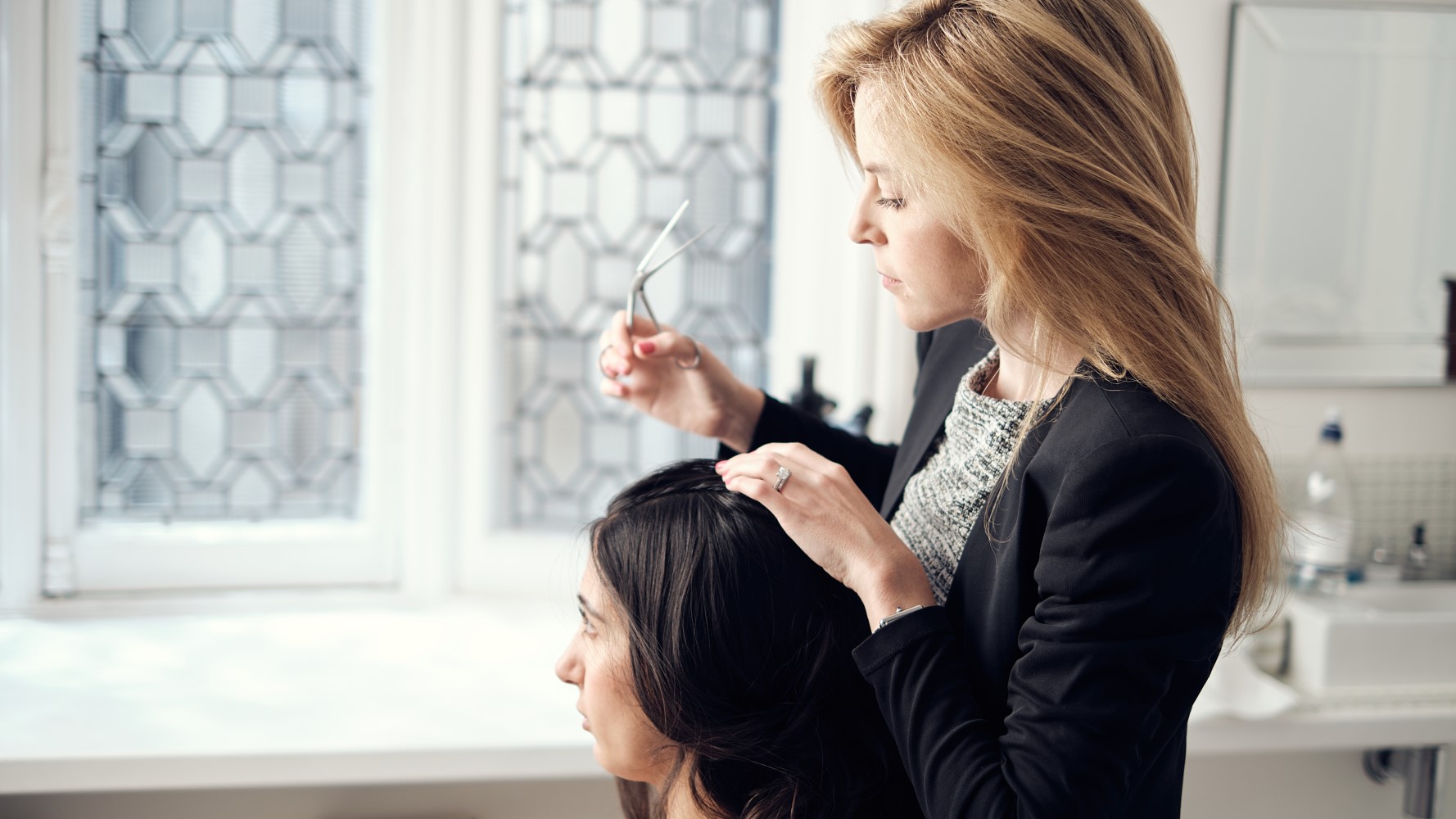
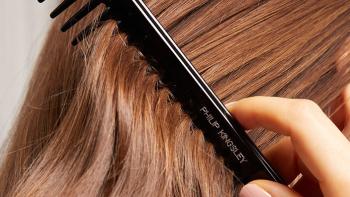
Anabel Kingsley, Brand Owner, explains why hair loss is so common when experiencing menopause.
Menopausal Hair Thinning
Hormone Replacement Therapy (HRT) can ease symptoms of the menopause by raising levels of oestrogen. The treatment is taken to relieve undesirable menopausal symptoms, including hot flushes, mood swings, osteoporosis and decreased libido.
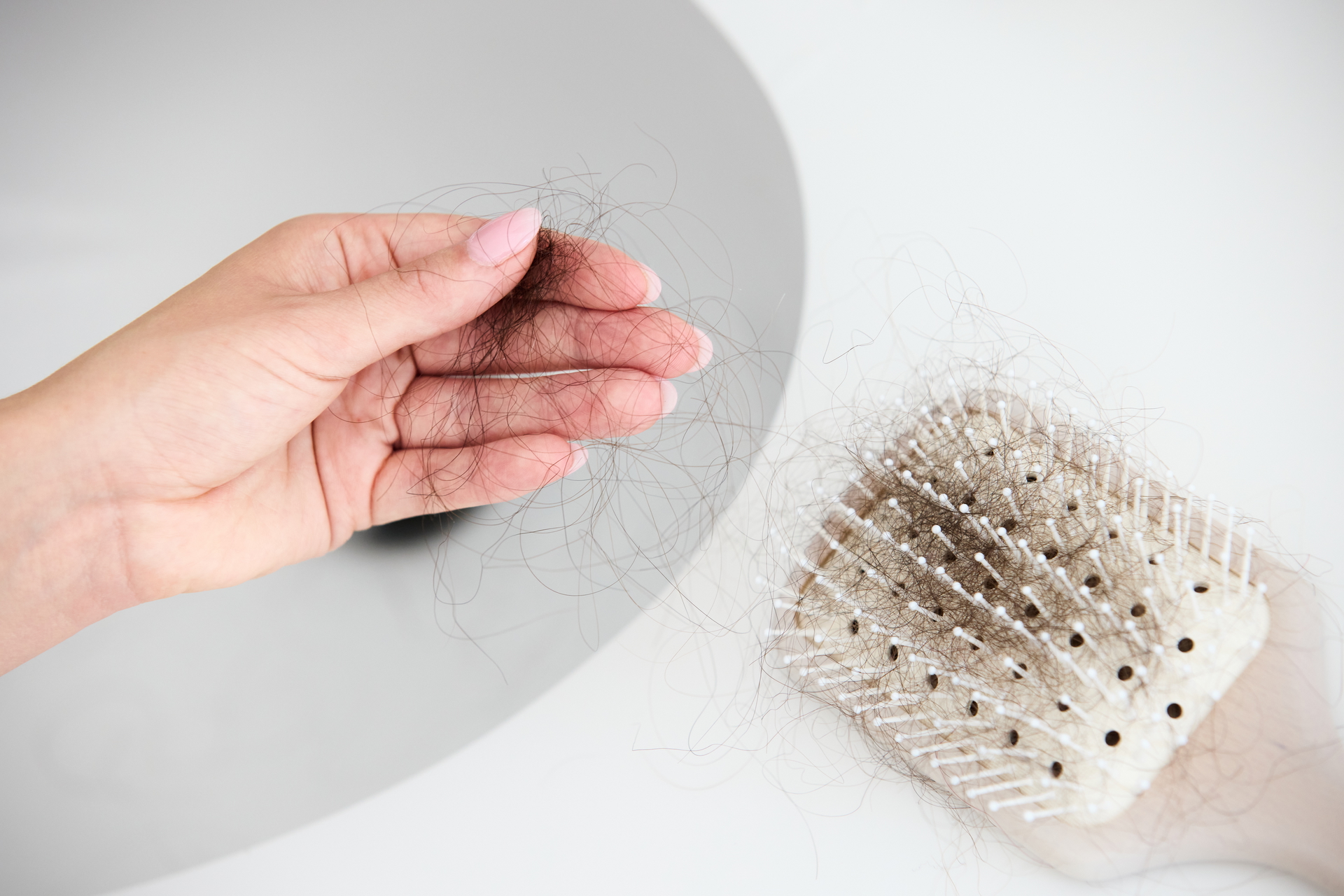
HRT is also known to help with hair thinning. This is because oestrogen is a hair-friendly hormone, and for some women, it is the drop in oestrogen levels during the menopause that can trigger the onset of hair thinning, as the ratio between testosterone and oestrogen becomes altered. HRT helps keep your hair in its growth phase for longer, and therefore stops it from moving into its shedding phase prematurely.
If you decide to go ahead with HRT, we suggest making your doctor aware before beginning treatment that you are concerned about your hair. This may influence which therapy they think is best for you. Certain HRT therapies are hair-friendly while others are not — plus, some may even exacerbate hair thinning. You may also want to consult with one of our Trichologists, who will be able to work with your doctor in finding the best all-round HRT treatment.
In this blog, our trichologists at Philip Kingsley explain how illnesses like flu can trigger telogen effluvium, why shedding typically appears weeks after recovery, and what you can do to support healthy regrowth—through targeted scalp care, nutrition, and gentle hair practices.
Due to the rise in popularity of weight loss medications like Ozempic, Wegovy and Mounjaro, we’ve witnessed an influx of clients experiencing hair loss since taking them, who have come to see us for guidance. But why does it happen? And what can you do about it? Here we delve into the facts and share everything you need to know.