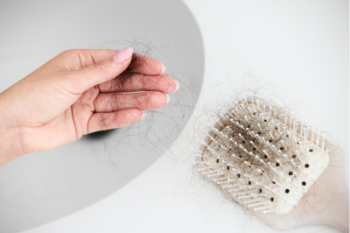
The information blood tests can provide is often crucial in the treatment of hair loss and/or reduced hair volume. At the Philip Kingsley clinics in London and New York, they are an integral part of our holistic treatment approach to addressing hair and scalp problems. Philip Kingsley trichologists have over 5 bespoke ‘blood profiles’ that they may recommend during consultations.
It is our practice to consult with your general doctor and any other relevant medical specialists about your blood test results. Blood tests can be administered by your doctor who sends the blood to a laboratory for analysis according to the recommended profile. The results are then forwarded onto our trichologists for their analysis. Alternatively, we might send you directly to a laboratory. In London, our trichologists work with The Doctors Laboratory on Harley Street. Depending on the tests you have done, we will receive the results within a day to two weeks.
Philip Kingsley trichologists analyse blood tests differently than a medical doctor. When we assess results, we are looking for readings that might affect your hair – a non-essential tissue. Being non-vital tissue, hair is often affected by subtle changes. In fact, numbers may be within the normal range and still impact your hair. Your GP will use blood test results to flag levels that might be damaging to your general health, and essential tissues, such as your liver and heart. As such, the hair is commonly overlooked in routine testing.
Concerned about hair loss?
If you would like to find out more information, our clinics based in London and New York specialise in hair and scalp issues.
Alopecia areata is often linked to periods of intense stress. Following the sudden loss of my father, I developed the condition myself. This is my personal experience of living with alopecia areata and navigating the uncertainty of hair loss.
In this blog, our trichologists at Philip Kingsley explain how illnesses like flu can trigger telogen effluvium, why shedding typically appears weeks after recovery, and what you can do to support healthy regrowth—through targeted scalp care, nutrition, and gentle hair practices.
Due to the rise in popularity of weight loss medications like Ozempic, Wegovy and Mounjaro, we’ve witnessed an influx of clients experiencing hair loss since taking them, who have come to see us for guidance. But why does it happen? And what can you do about it? Here we delve into the facts and share everything you need to know.
Understanding each stage can help solve common hair dilemmas and really support healthier hair.
Your hair doesn’t just grow randomly - it follows a precise cycle and understanding these can be the key to managing hair health, density and growth. From natural shedding to slower growth with age, every stage of the hair growth cycle plays a role in how your hair looks and feels. Let’s dive a little deeper.